
built to work together
Portions, not numbers.
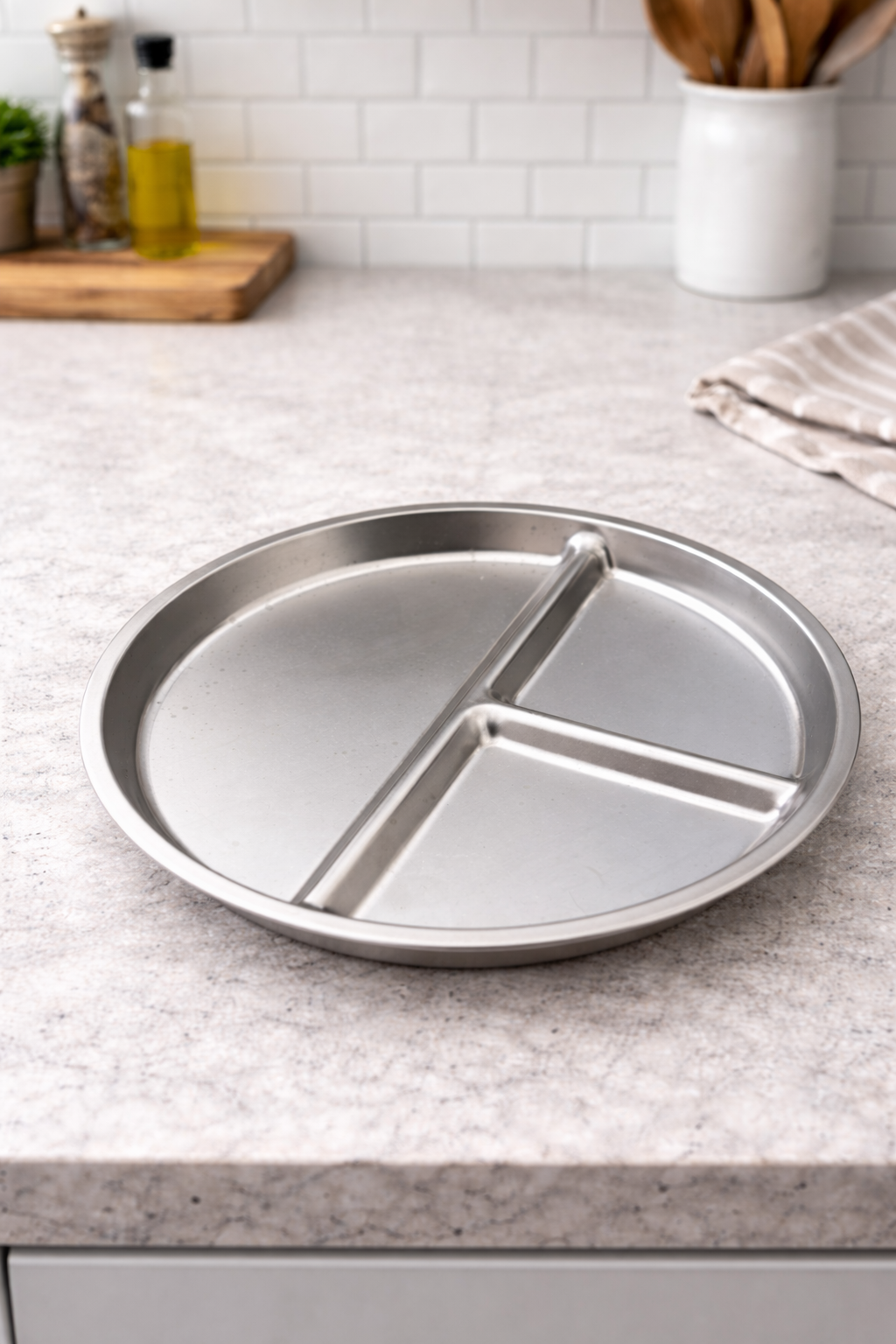
Your Portion Plate is the starting point. You use it to visually learn what balanced portions look like for your meals; carbs, protein, fats, and colour, in a way that feels natural and realistic.
Once you’ve plated a meal a few times, your brain begins to recognise those portions without effort. There’s no weighing, counting, or tracking. Just seeing, serving, and eating. The plate trains your eye so balance becomes second nature, and it also acts as a perfect guide when filling your other containers.
Transferring your meals is simple. The portions you place on the plate can be directly measured into your Morning Mini, Bliss Bowl, or Balance Box. The containers aren’t about restriction, they’re about consistency.
You’re not guessing, relying on hunger alone, or eating from packets. Using the plate as your measuring guide allows you to carry balanced portions into busy mornings, workdays, treats, and takeout. One system, many moments, all without overthinking.
Tip for using your Portion Plate as a measuring tool for the other containers:
The largest section is your base, small sections are extras/toppings — this same logic works if you’re using your Morning Mini jar or Balance Box. The plate shows you visually how much of each element to add so you don’t need scales or measuring spoons.
rise & nourish
Breakfast sets the tone for appetite regulation for the rest of the day. Research in behavioural psychology shows that early-day portion size strongly influences later food intake, often without us noticing. When breakfast is oversized or unstructured, it can lead to increased hunger signals, cravings, and larger portions at subsequent meals.
Using a consistent, pre-defined breakfast container removes guesswork and reduces decision fatigue. Over time, the brain learns what “enough” feels like in the morning, helping stabilise blood sugar, improve satiety cues, and reduce the urge to overeat later in the day. The goal isn’t restriction, it’s training the body and brain to trust a predictable amount.
blue calm chia
What you’ll need
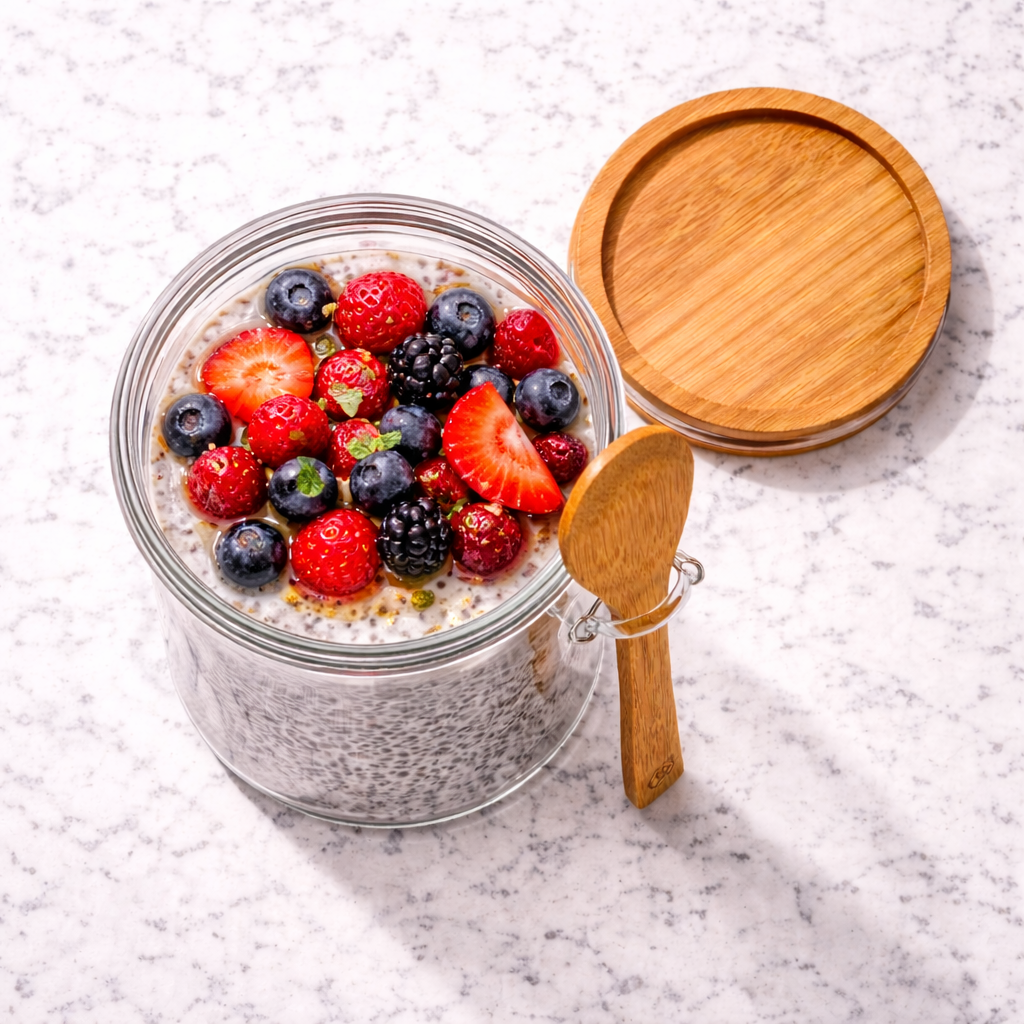
2 tbsp chia seeds
¾ cup milk of choice (or yogurt + splash of milk)
Handful of berries (fresh or frozen)
Optional drizzle of honey or maple
How to make
Stir everything together, refrigerate overnight or for at least 2 hours. Eat cold.
Why it works
High fibre, slow digestion, steady energy. Keeps you full without heaviness.
banana bliss bowl
What you’ll need
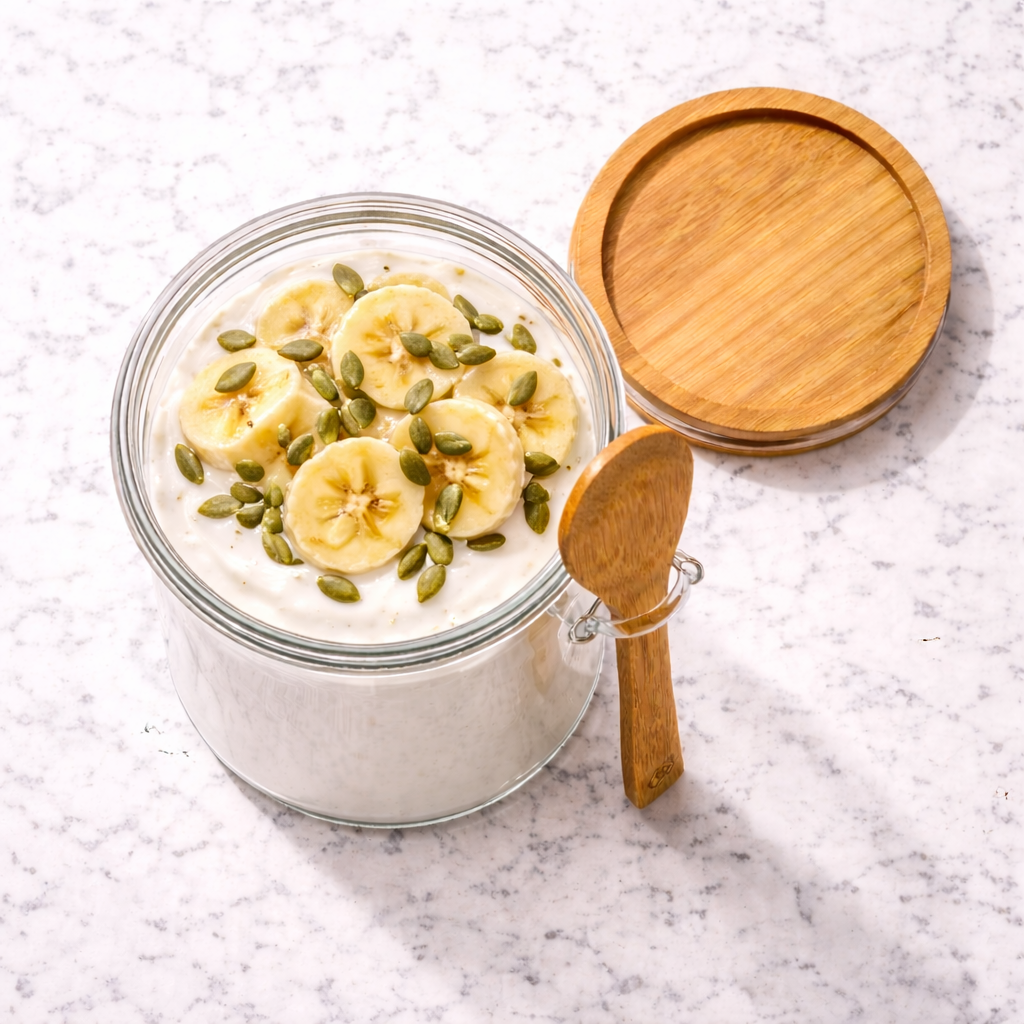
¾ cup plain Greek or coconut yogurt
½ banana, sliced
1 tbsp nuts or seeds (almonds, pumpkin, sunflower)
How to make
Layer yogurt, banana, and crunch directly into the Morning Mini.
Why it works
Balanced protein + carbs. Gentle on digestion and easy to repeat daily.
oat reset jar
What you’ll need
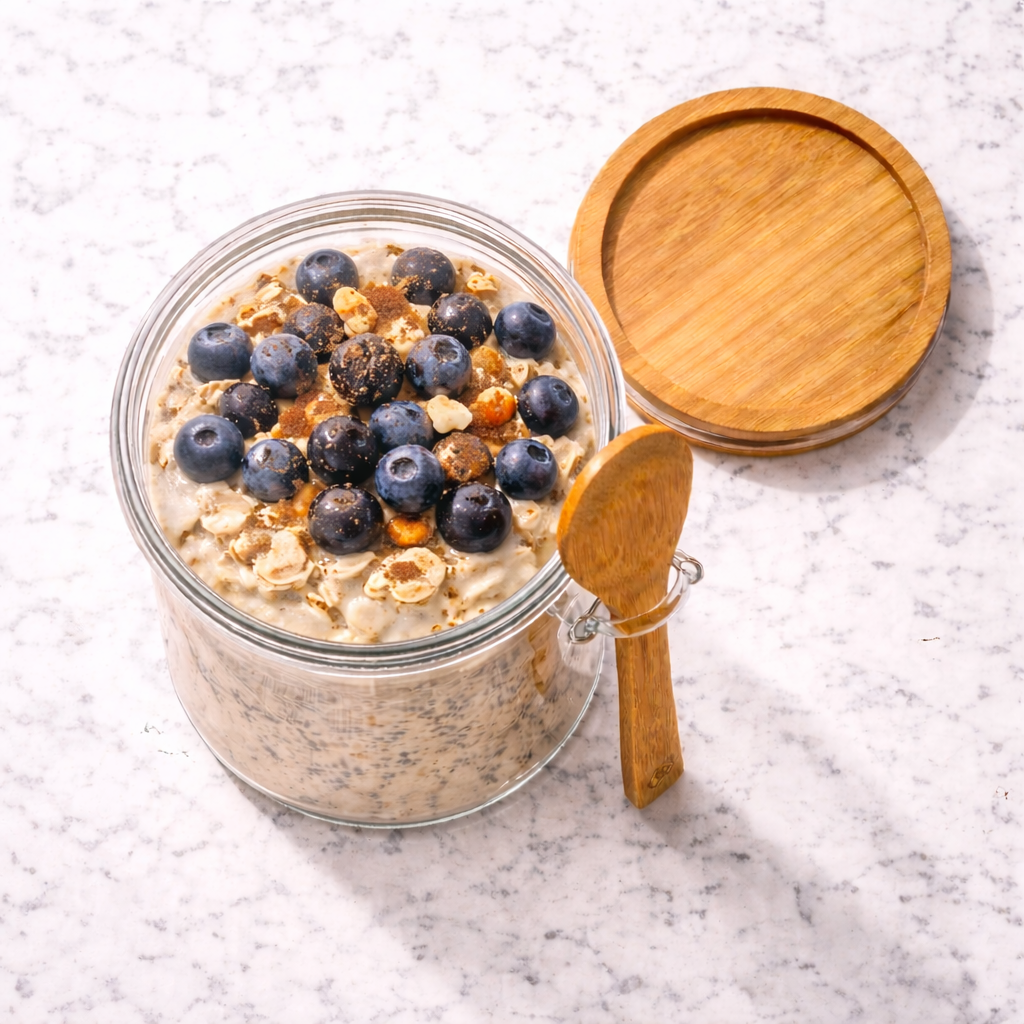
½ cup rolled oats
½ cup milk of choice
Handful of blueberries
Pinch of cinnamon
How to make
Mix everything together and soak overnight. Eat cold or warm briefly.
Why it works
Comforting, filling, and predictable. No spikes, no crashes.
workday eats
Lunch is a critical meal for regulating energy and appetite through the rest of the day. Behavioural research shows that when lunch portions are unpredictable or oversized, people often experience mid-afternoon crashes, cravings, and mindless snacking.
Using your Balance Box consistently trains the brain and body to recognise what “enough” looks like, which reduces overeating later. It also helps stabilise blood sugar and keeps energy levels smooth, so your workday feels manageable rather than a cycle of highs and crashes. Over time, this approach strengthens portion awareness, making balanced eating automatic, without willpower or calorie tracking.
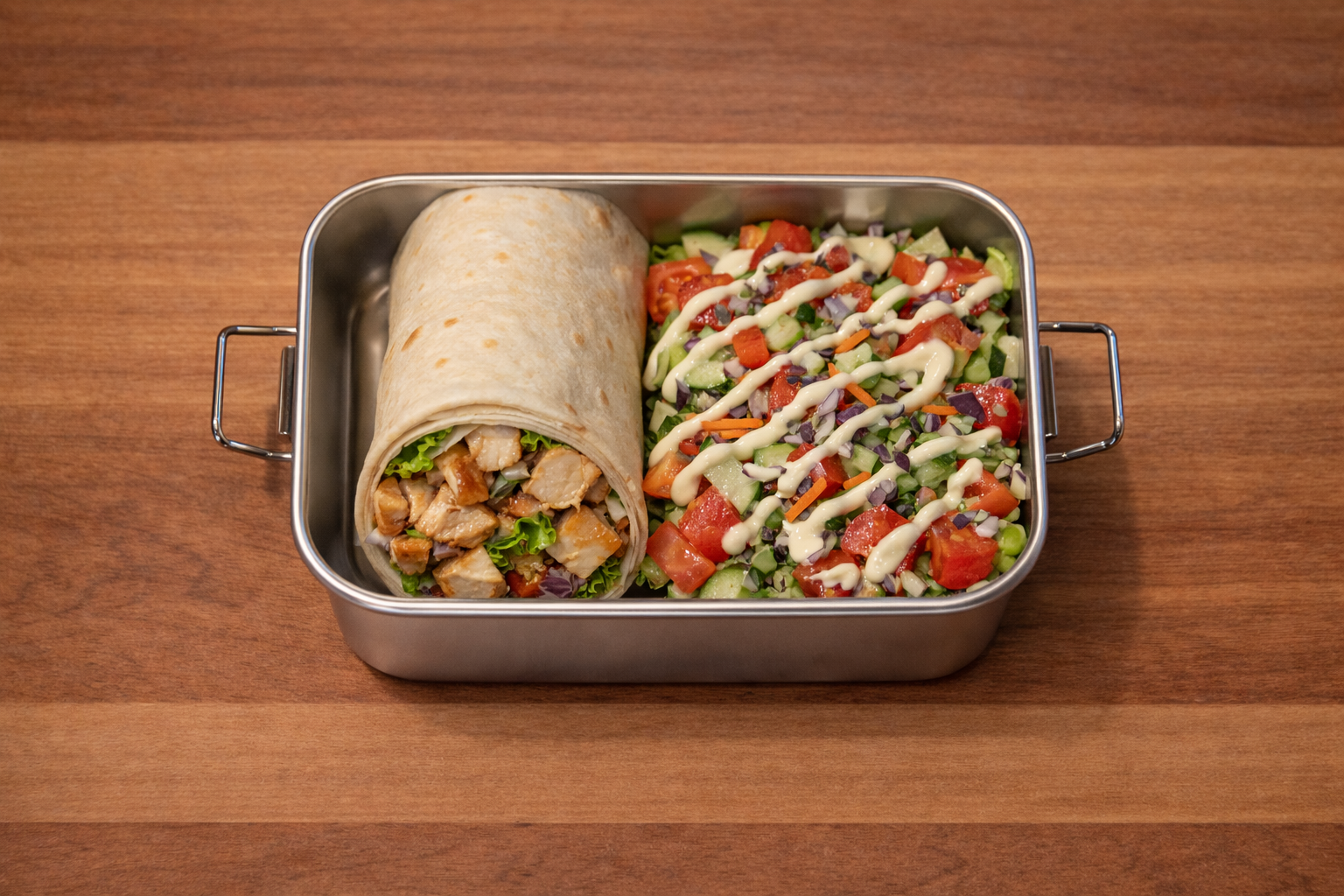
chicken wrap balance
Ingredients:
1 small tortilla or flatbread
100g cooked chicken slices
1 cup salad (lettuce, tomato, cucumber)
1 tsp mayo or dressing
Instructions:
Roll the chicken and salad in the tortilla.
Place the wrap in one compartment, extra salad in another.
Optional: small portion of cheese or avocado.
Easy, portable lunch that fills you up without overthinking.
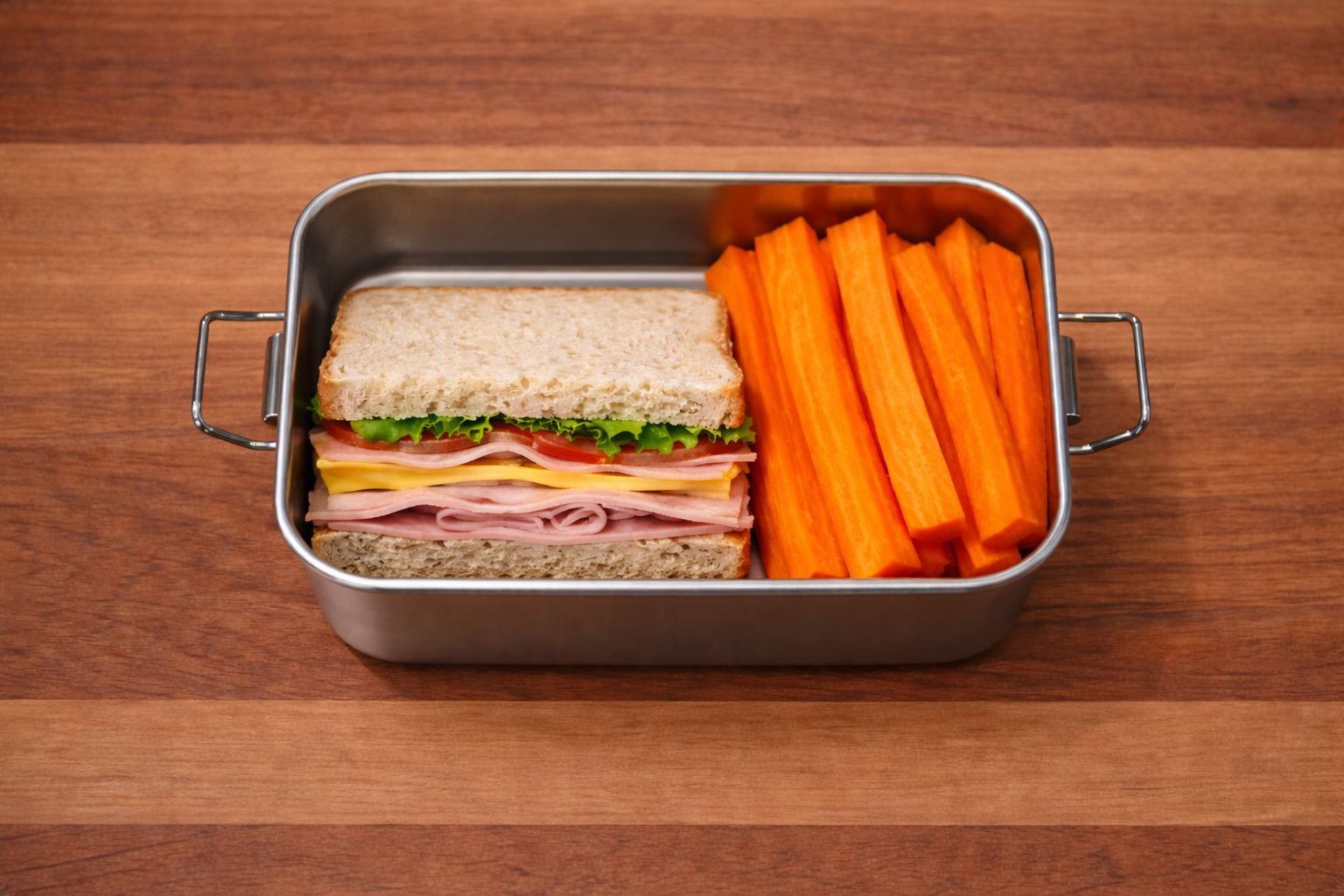
ham & cheese favourite
Ingredients:
2 slices of bread
2–3 slices of ham or turkey
1 slice of cheese
1 cup carrot or cucumber sticks
Instructions:
Make your sandwich and cut in half.
Place sandwich in one compartment, veggie sticks in the other.
Optional: a small handful of grapes or cherry tomatoes.
Familiar, satisfying, and portioned perfectly for work.
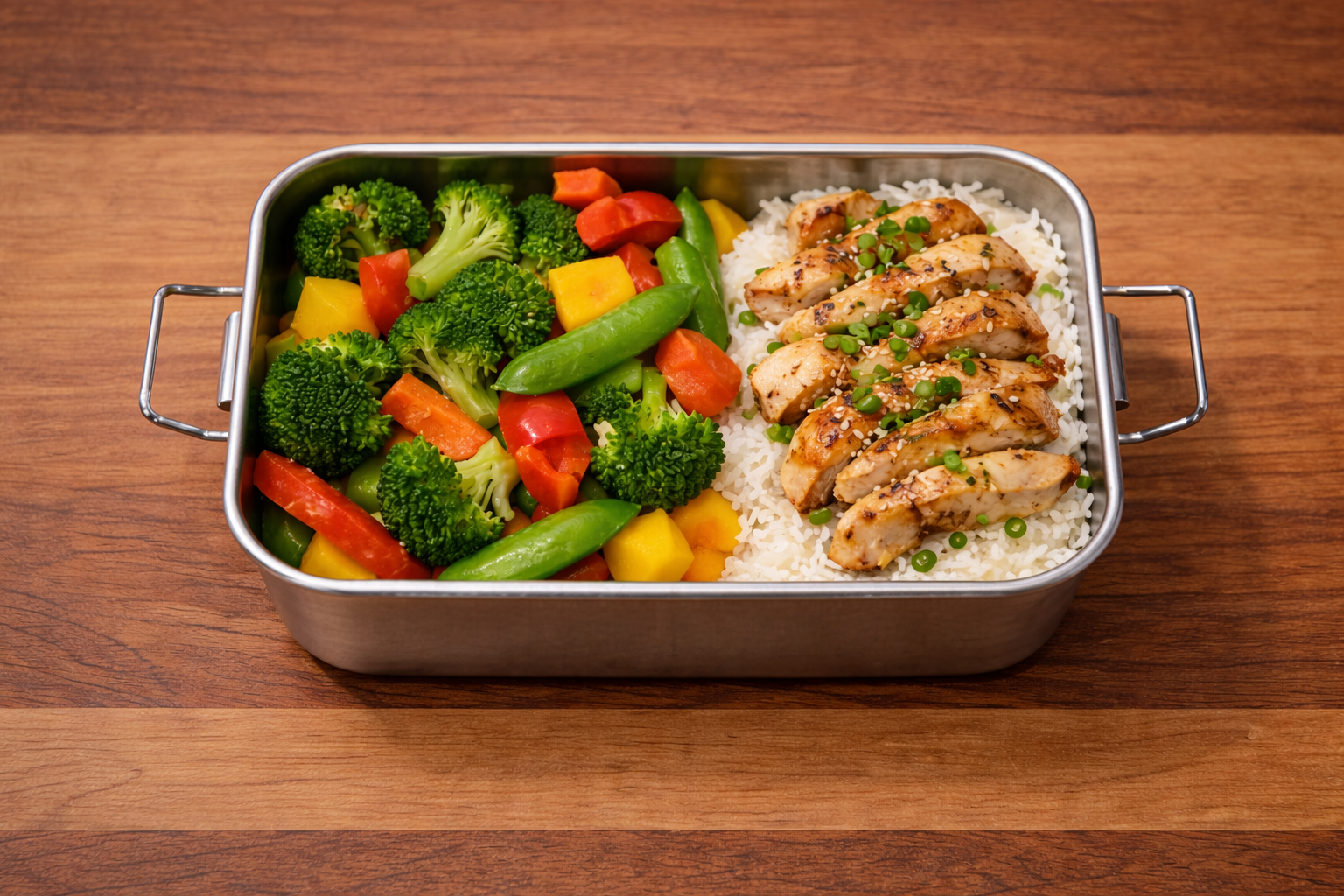
wok & roll
Ingredients:
½ cup cooked rice (white or brown)
100g diced cooked chicken (or tofu)
½ cup mixed vegetables (peas, carrots, corn)
1 tsp soy sauce or light seasoning
Instructions:
Fill the largest compartment with vegetables.
Add rice to one smaller section and chicken to the other.
Optional: sprinkle with sesame seeds or a dash of soy sauce.
Quick, tasty, and feels like a normal home or takeout meal.
everyday plates
Dinner is often the most relaxed meal of the day, but it can also be the one where we overeat without realizing it. Using a portioned plate helps you enjoy normal, satisfying meals while staying consistent with your eating habits. It encourages balance between protein, carbs, and vegetables, trains your brain to recognise what “enough” feels like, and prevents late-night snacking. With the right portions, dinner becomes stress-free, enjoyable, and nourishing, without needing to track calories or restrict yourself.
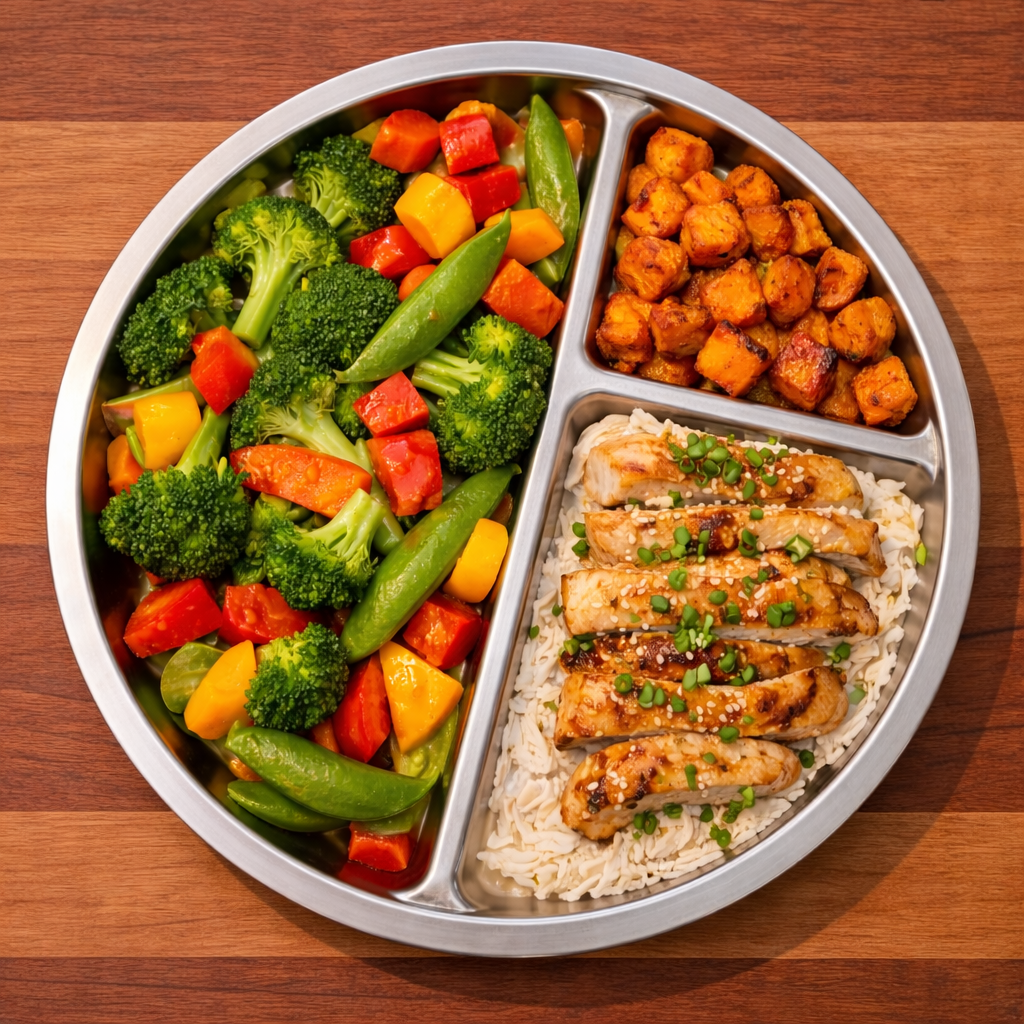
chicken, mash & veg plate
Ingredients:
100g roasted or grilled chicken
½ cup mashed potatoes or sweet potato mash
1 cup steamed or roasted veggies (carrots, peas, broccoli)
Instructions:
Fill the largest compartment with veggies.
Place mash in one smaller section, chicken in the other.
Optional: a pat of butter or drizzle of gravy for flavor.
Enjoy a comforting, satisfying meal.
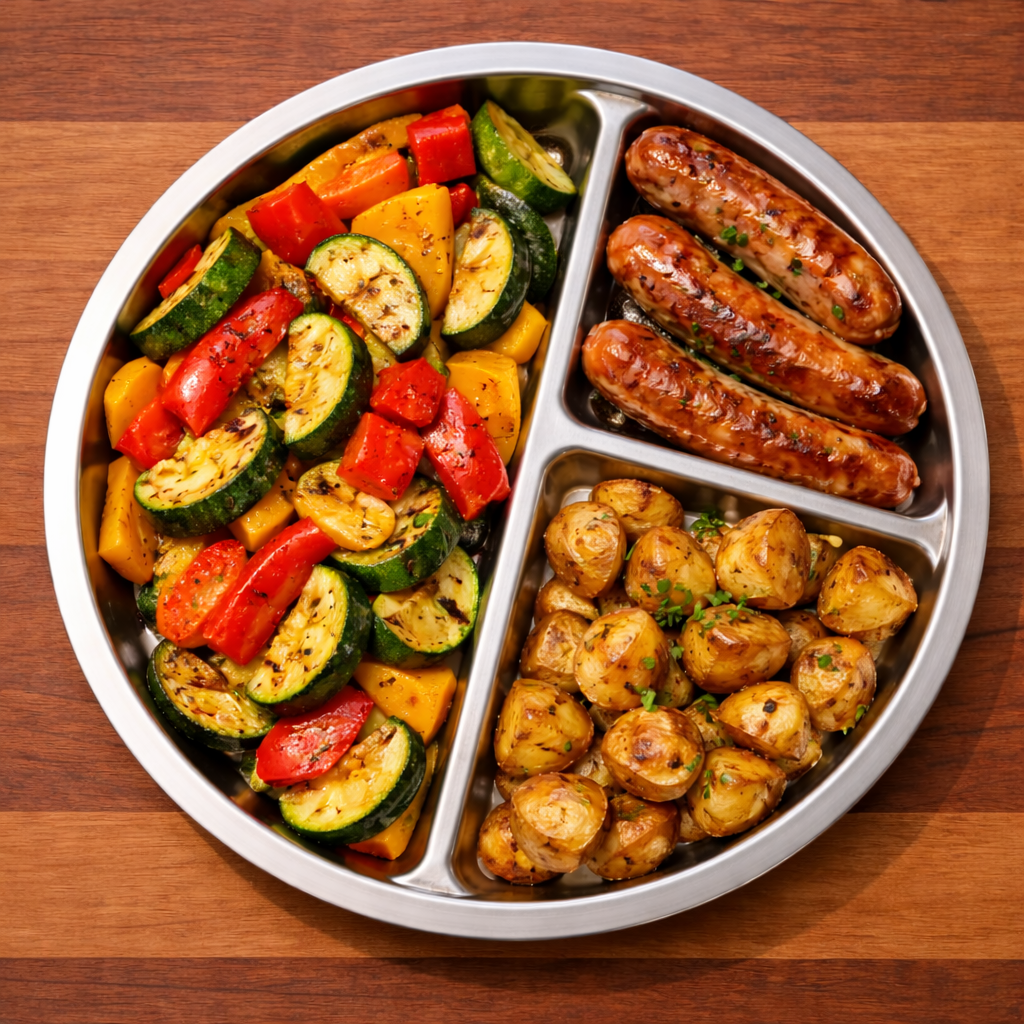
Sausage & veggie roast plate
Ingredients:
2 cooked sausages (any type you like)
½ cup roasted potatoes or pumpkin
1 cup roasted mixed vegetables (zucchini, capsicum, carrot)
Instructions:
Fill the largest compartment with vegetables.
Add roasted potatoes to one section, sausages to the other.
Optional: ketchup or mustard on the side.
A simple, everyday plate that hits all the right portions.
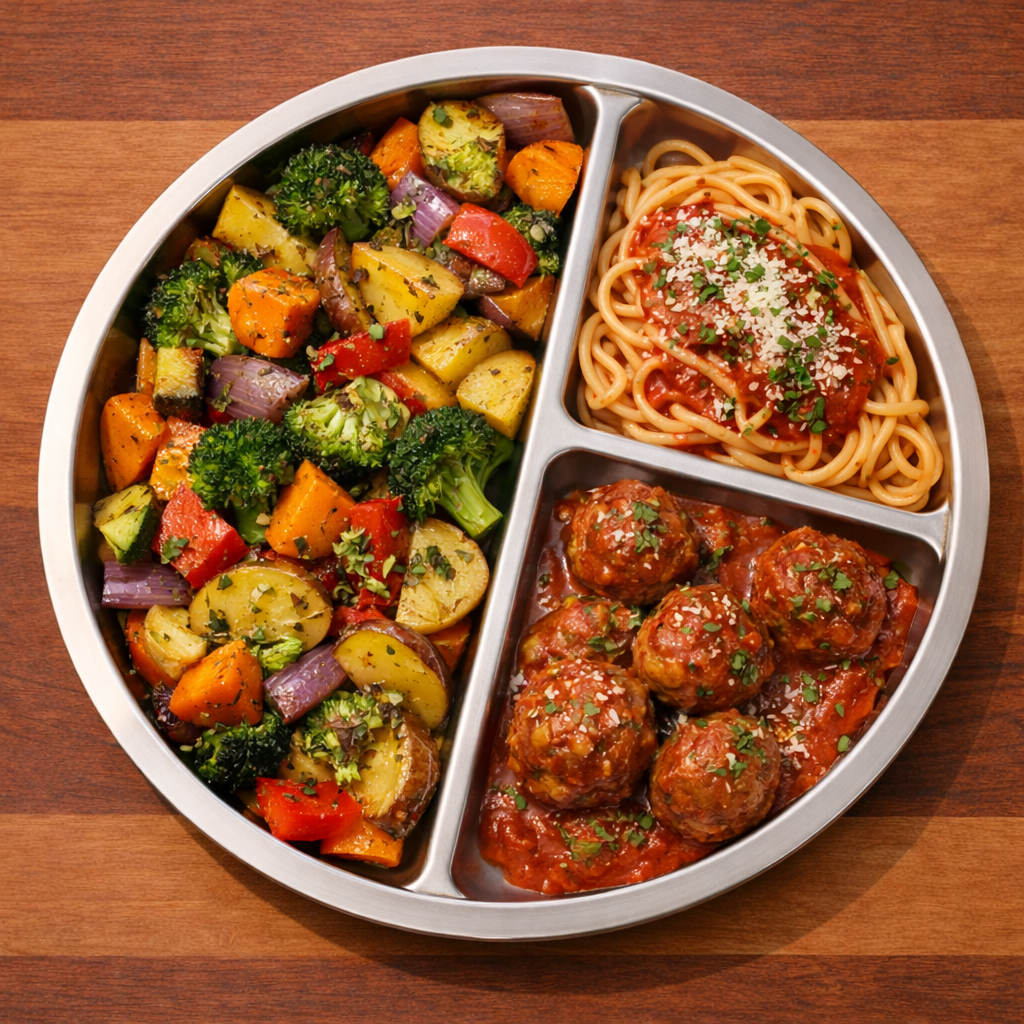
pasta & meatball plate
Ingredients:
½ cup cooked pasta (any shape)
3–4 meatballs (beef, chicken, or plant-based)
1 cup roasted or steamed veggies (broccoli, peas, zucchini)
Instructions:
Place veggies in the largest compartment.
Add pasta and meatballs to the smaller sections.
Optional: sprinkle cheese or drizzle olive oil.
A balanced, familiar dinner everyone will enjoy.
bliss bites
Treats aren’t a “cheat” — they’re an essential part of a balanced eating mindset. The Bliss Bowl allows you to enjoy your favourite indulgences in a pre-portioned, intentional way, so you can satisfy cravings without overdoing it.
Research in behavioural psychology shows that denying yourself small pleasures often leads to overeating later, but when treats are planned and portioned, your brain learns balance and self-trust. The Bliss Bowl turns everyday indulgences into a guilt-free, mindful habit, making it easier to stick to your Portion system and enjoy food without stress.
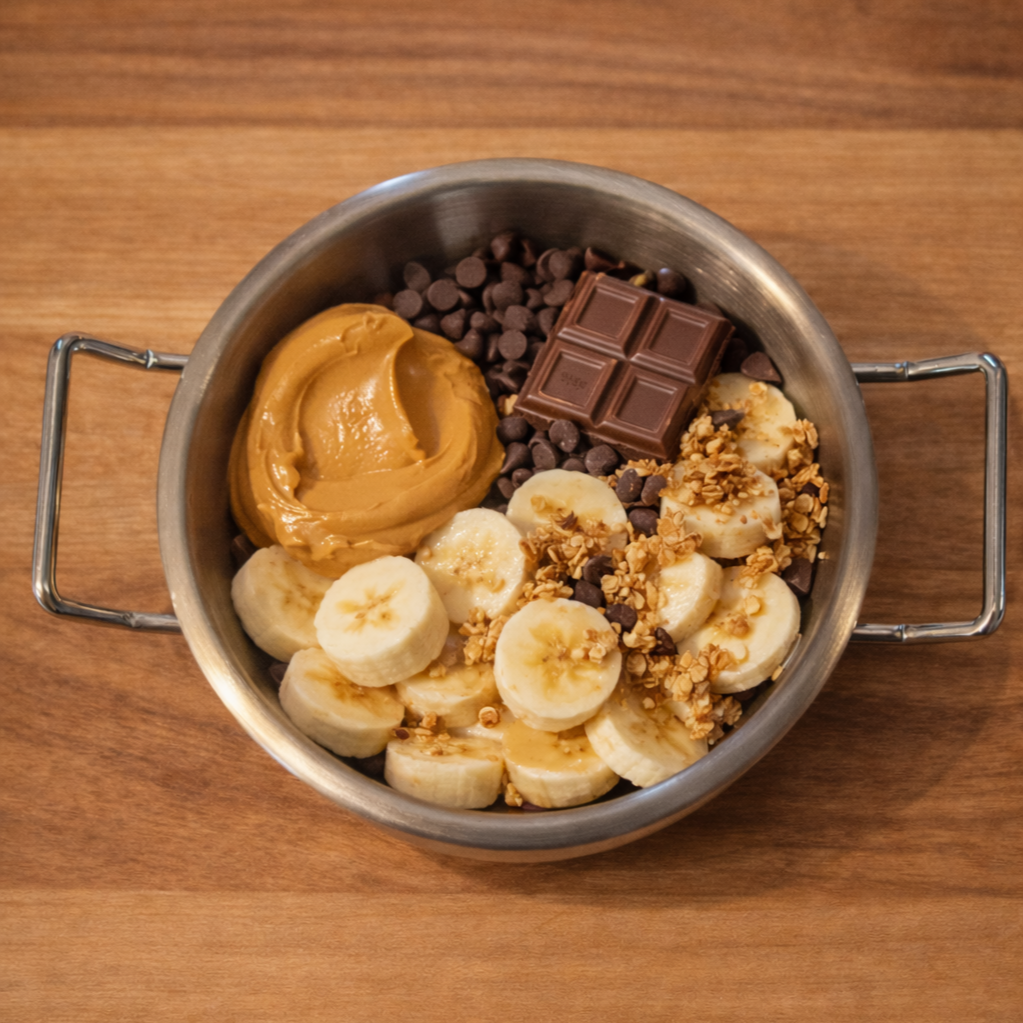
chocolate peanut crunch
Ingredients:
1 tbsp peanut butter
1 small square of milk chocolate or chocolate chips
½ banana, sliced
Optional: sprinkle of granola
Instructions:
Place banana slices in the Bliss Bowl.
Top with peanut butter and chocolate pieces.
Optional: sprinkle a little granola for extra crunch.
Enjoy mindfully — perfectly portioned for a sweet treat.
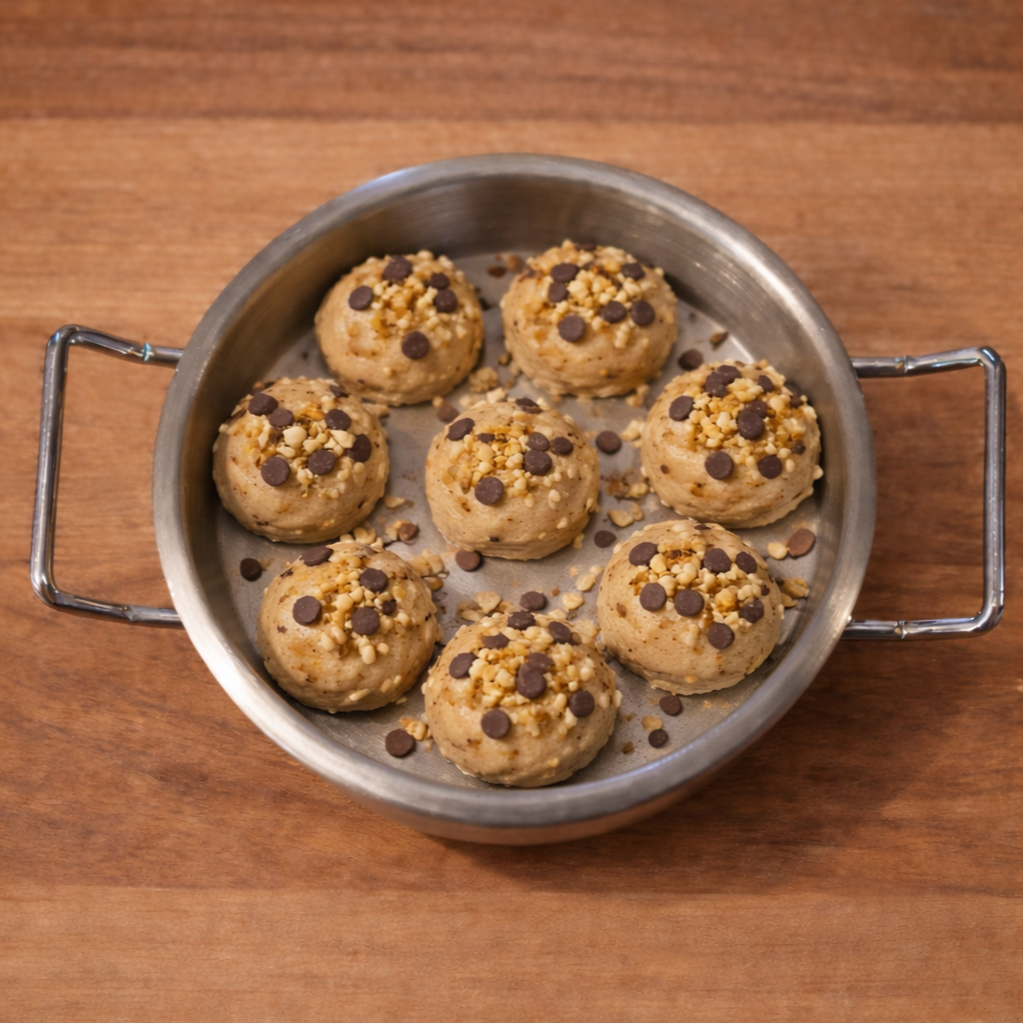
cookie dough delight
Ingredients:
2 small cookie dough balls (homemade or store-bought)
1 tsp chocolate chips
1 tsp chopped nuts (optional)
Instructions:
Place cookie dough balls in the Bliss Bowl.
Sprinkle chocolate chips and nuts on top.
Enjoy slowly, savoring each bite — your treat portion controlled.
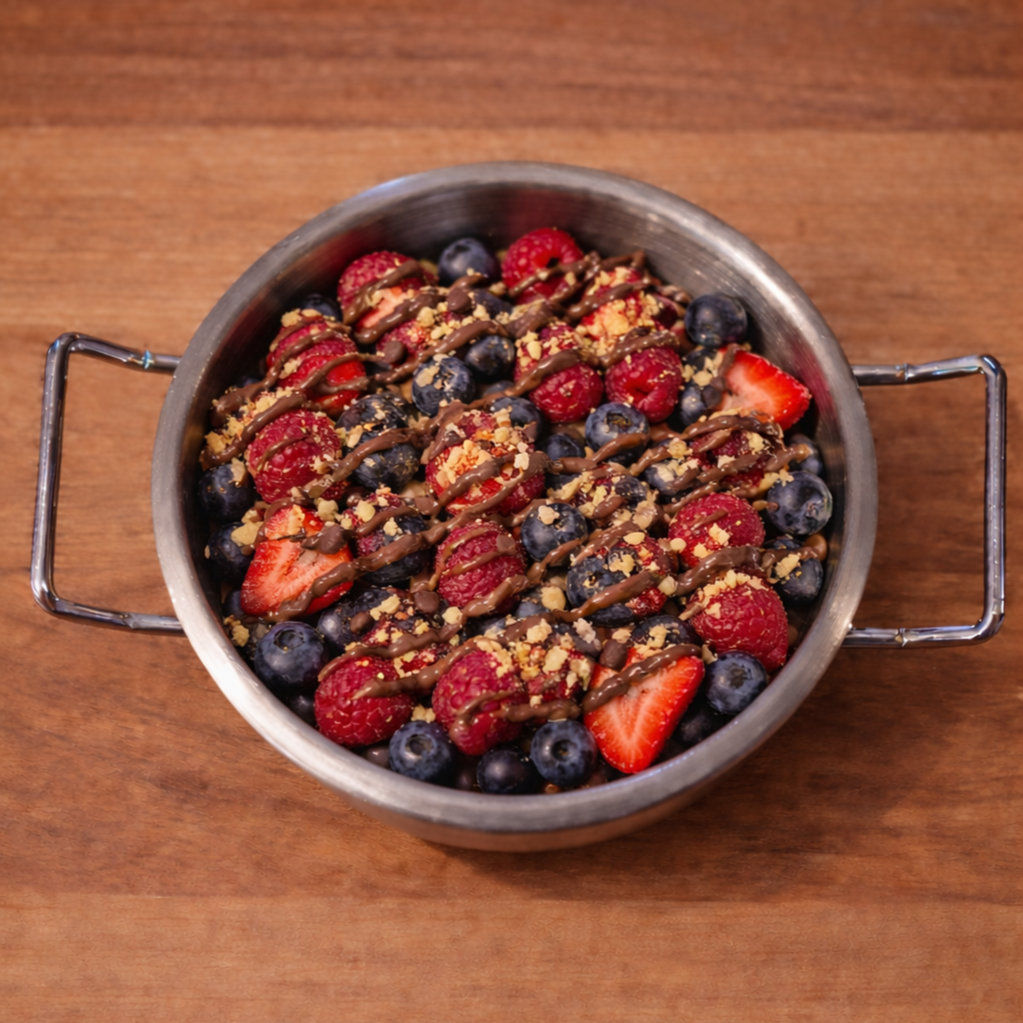
berry & chocolate swirl
Ingredients:
½ cup mixed berries (strawberries, blueberries, raspberries)
1 tbsp chocolate hazelnut spread or chocolate chips
1 tbsp crushed biscuits or graham crackers (optional)
Instructions:
Place berries in the Bliss Bowl.
Drizzle with chocolate spread and sprinkle crushed biscuits on top.
Enjoy as a sweet, tangy, chocolatey portioned treat.
Portion Tips for Bliss Bowl:
Treat foods are enjoyed intentionally, not mindlessly.
Using the Bliss Bowl teaches your brain what “enough” looks like for indulgences.
Small, satisfying portions help reduce cravings without feeling deprived.
enjoying takeout with portion
Takeout isn’t “bad” — it’s a normal part of life, especially on busy days. The Portion Plate shows you how to enjoy your favourite meals without overdoing it, helping you stay balanced while still having the foods you love.
Using your plate for takeout teaches your brain to recognise appropriate portions even outside of home-cooked meals, reducing guilt and mindless overeating. By including takeout in your routine in a mindful way, you can enjoy real life, stay consistent with healthy habits, and build a sustainable relationship with food.
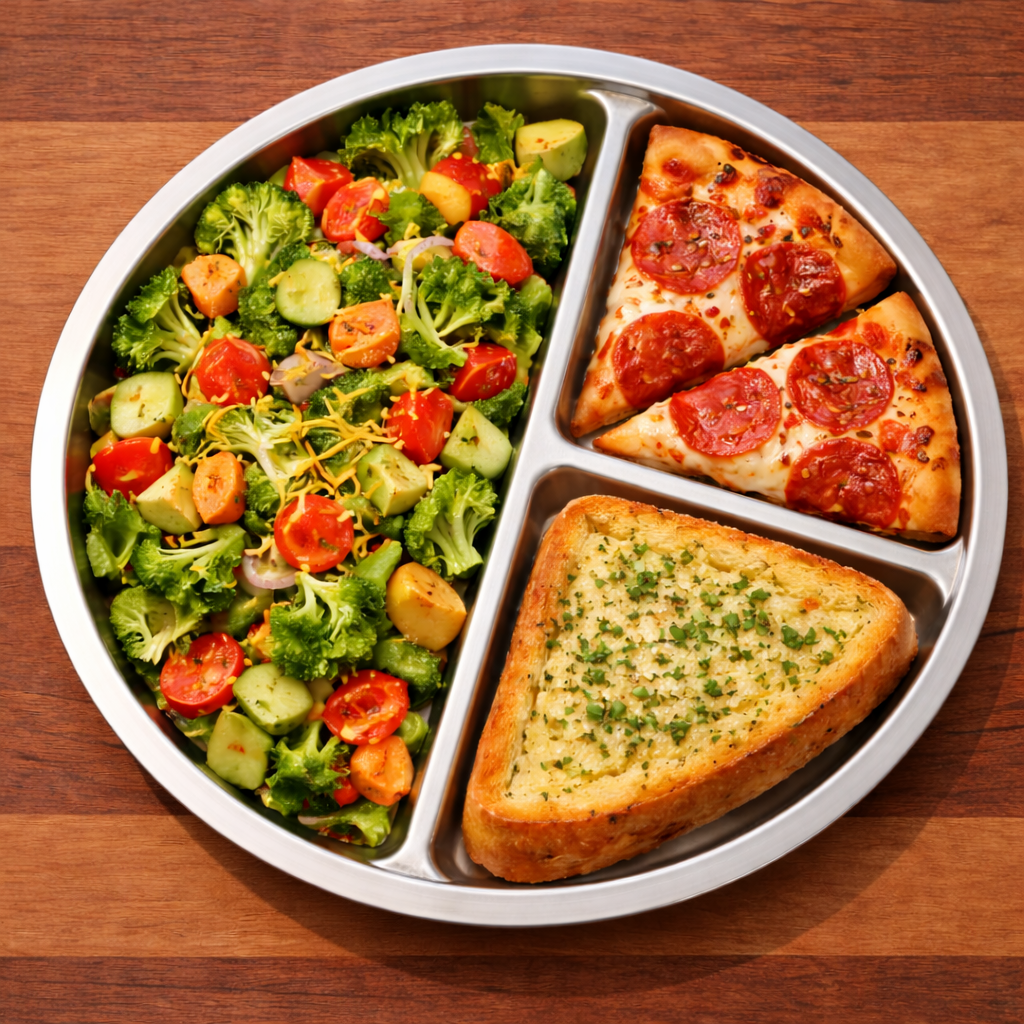
pizza night
Instructions:
Place 2–3 small slices (or equivalent portion) in one compartment for your protein & carbs.
Add a side salad or steamed veggies in the largest compartment.
Optional: a small piece of garlic bread can go in the remaining section.
Eat slowly, focusing on savouring each bite. The plate helps you enjoy pizza without mindless extra slices.
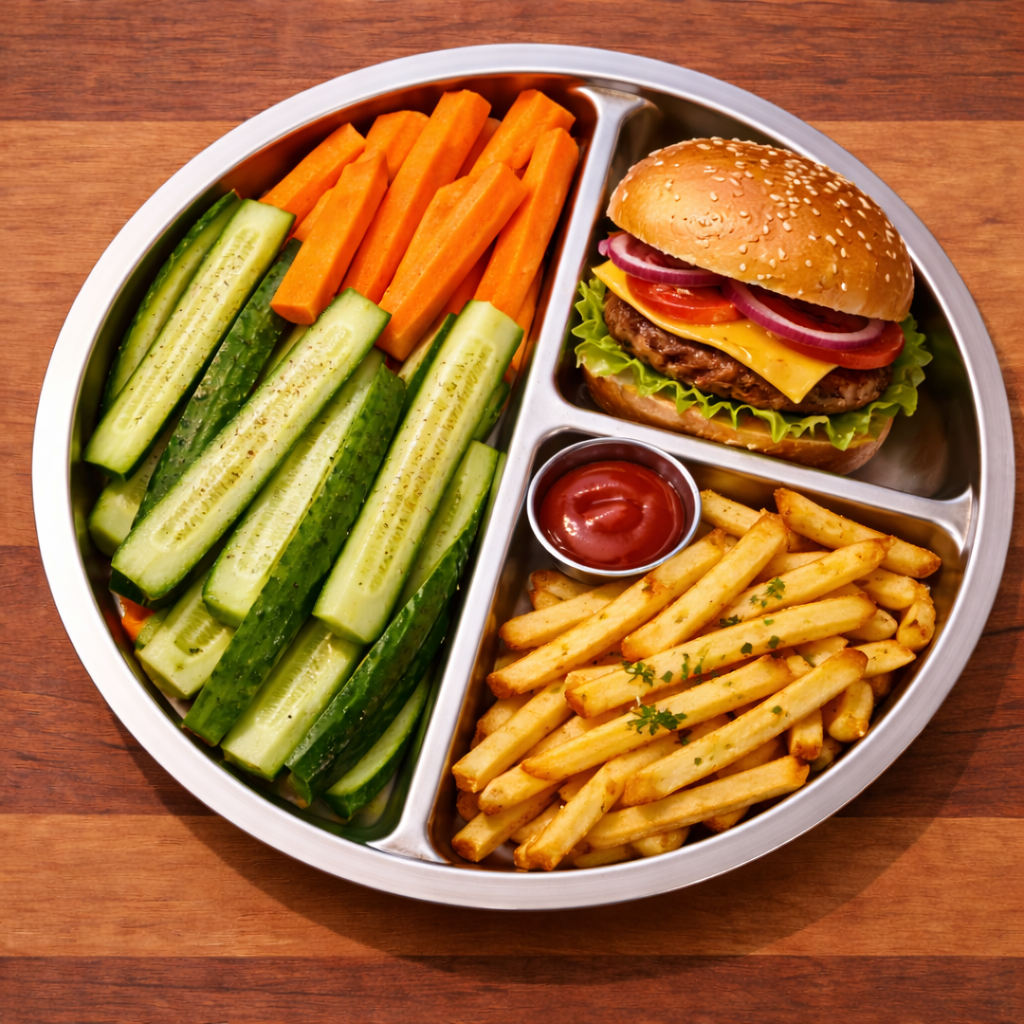
burger & fries
Instructions:
Place your burger in one compartment (consider removing or portioning the bun if you like).
Fill the largest compartment with salad, roasted veggies, or carrot sticks.
Add a small handful of fries in the remaining section.
Enjoy the combo — the portion plate keeps everything balanced and satisfying.
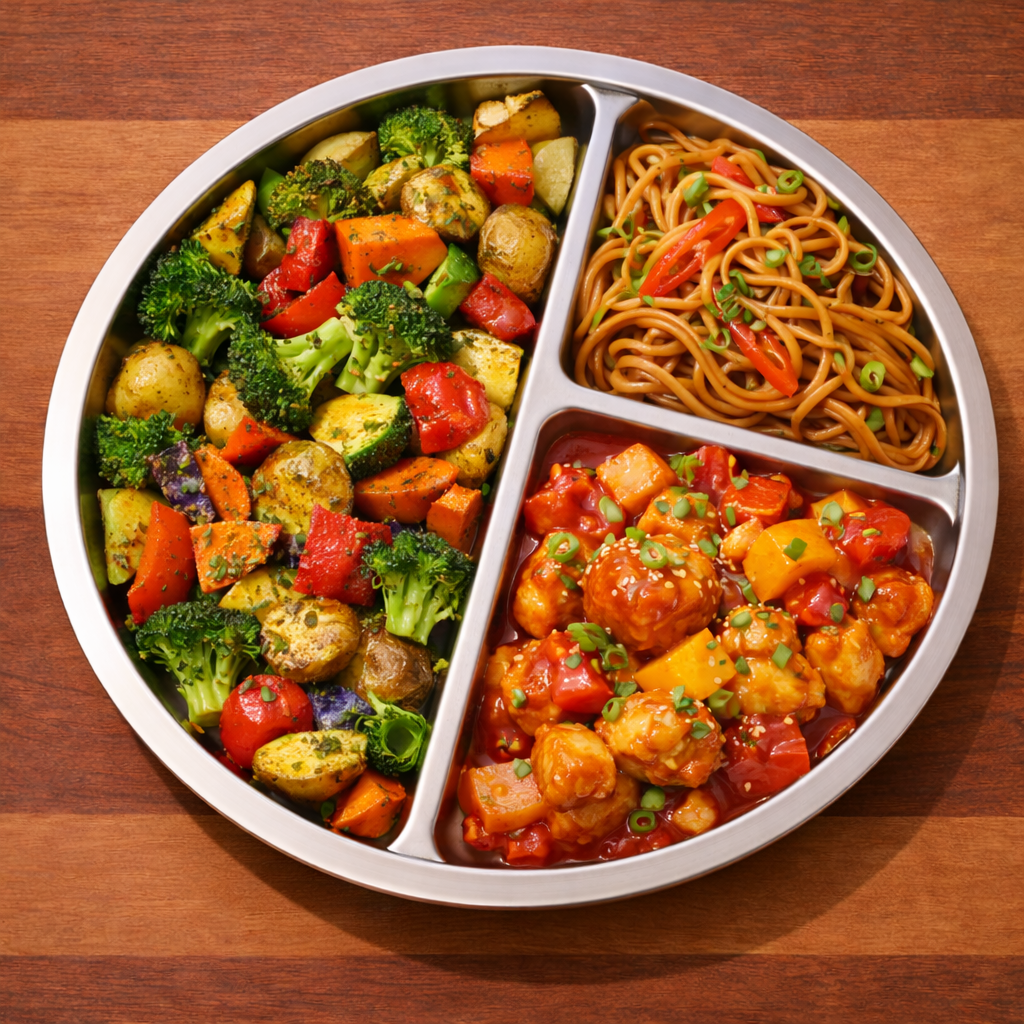
chinese takeout
Instructions:
Place a moderate portion of fried rice in one smaller compartment.
Fill the largest compartment with stir-fried vegetables or a side salad.
Place protein (chicken, beef, tofu) in the remaining compartment.
Eat slowly, letting the plate guide your portions and preventing “automatic extra servings.”
Tips for Takeout:
Use the plate to visualise balance, not restriction.
Make your largest compartment veggies or salad whenever possible.
Treat takeout as a mindful, enjoyable meal, not a “cheat.”